
Why we built Loqorina
3D is not the product. 3D is the interface. Here's the thinking behind Loqorina, and why we started with one question: where is it?
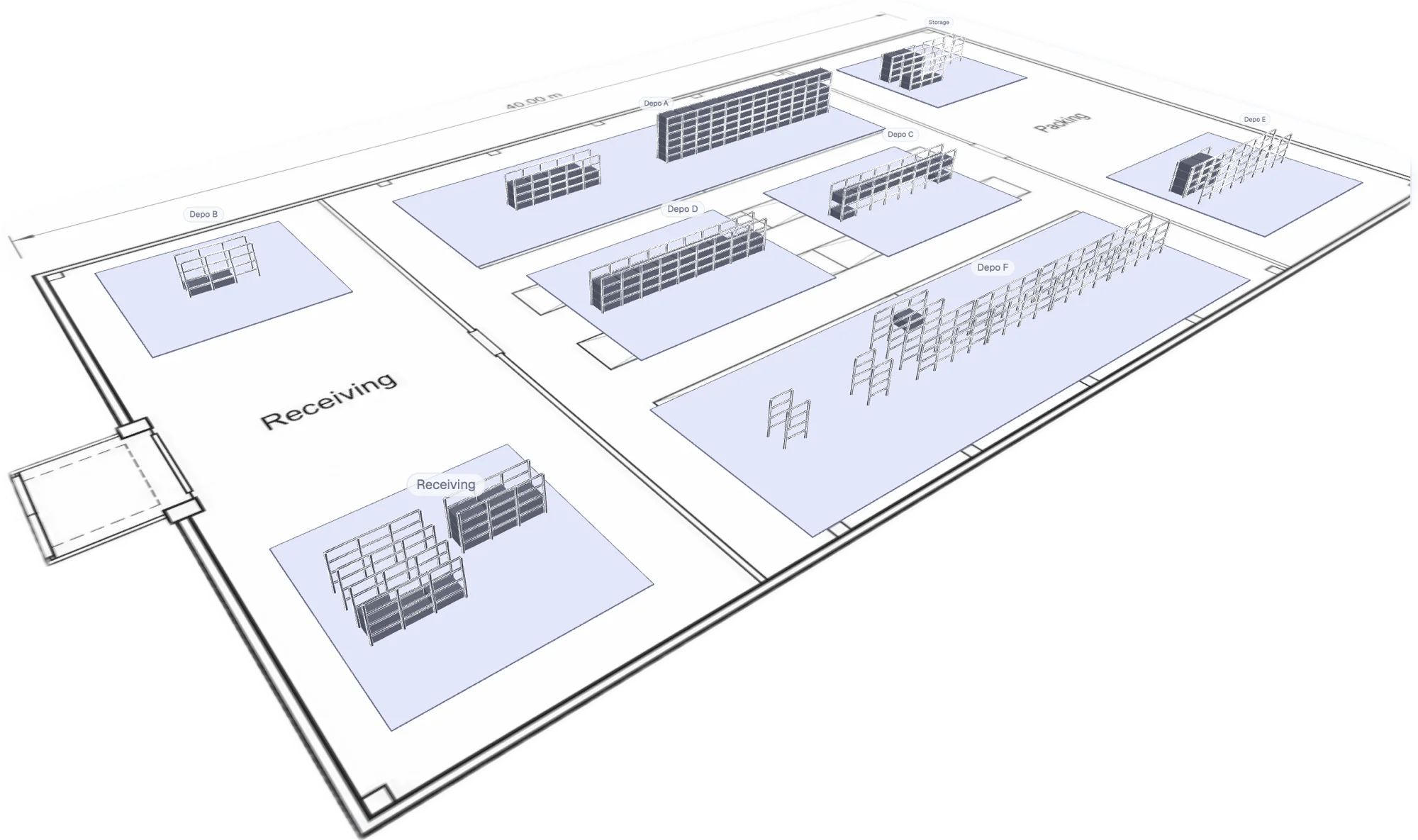
Every warehouse we talked to before writing a line of code had the same story. A spreadsheet somewhere with a list of racks. A whiteboard sketch of the floor plan, taped up near the office, slowly going out of date. A team that knew where things were because someone had been there for years, not because any system could tell them.
That's the problem we set out to solve. Not "how do we make a 3D warehouse app," but "how do we answer one question, fast, for anyone on the floor: where is it?"
3D is the interface, not the product
It's tempting to build a photorealistic digital twin, complete with lighting and materials and a camera that flies like a video game. We didn't. A warehouse doesn't need to look real. It needs to be correct, and it needs to stay correct without someone spending a day a quarter re-drawing it.
So Loqorina is schematic on purpose. Zones, racks, levels, and slots, each with a stable identity and a QR code, rendered simply enough that nobody mistakes the render for the source of truth. The source of truth is the data: where an asset was last scanned, by whom, and when.
The scan is the heartbeat
A layout you draw once and never touch again is a liability, not an asset. It looks authoritative right up until it's wrong, and by then nobody trusts it. The part of Loqorina we think about the most isn't the 3D scene. It's the QR scan on a phone in a warehouse worker's hand, because that scan is what keeps the twin honest.
Every time someone scans a location or an asset, that event is the update. Not a form someone fills out later. Not a monthly audit. The twin is only ever as stale as the last scan, and that's a number you can see, not a promise you have to trust.
A layer, not a replacement
We're not trying to replace the systems a warehouse already runs on. Loqorina imports from the spreadsheets and lightweight WMS tools already in place and sits on top of them as a spatial layer, answering "where is it?" without asking anyone to rip out what already works.
That's the whole thesis. Not more 3D. Just an answer that's actually current.
Apply this in your warehouse
Which asset is on which shelf? Find assets on a 3D warehouse map with Loqorina and see location addresses alongside movement history.
Give assets and locations QR identities. Scan with a phone, record moves and queue scans on the device when the warehouse connection drops.